He could not remember what had happened, but he knew in his dream that in some way the lives of his mother and his sister had been sacrificed to his own. It was one of those dreams which, while retaining the characteristic dream scenery, are a continuation of one’s intellectual life, and in which one becomes aware of facts and ideas which still seem new and valuable after one is awake. The thing that now suddenly struck Winston was that his mother’s death, nearly thirty years ago, had been tragic and sorrowful in a way that was no longer possible. Tragedy, he perceived, belonged to the ancient time, to a time when there were still privacy, love, and friendship, and when the members of a family stood by one another without needing to know the reason. His mother’s memory tore at his heart because she had died loving him, when he was too young and selfish to love her in return, and because somehow, he did not remember how, she had sacrificed herself to a conception of loyalty that was private and unalterable. Such things, he saw, could not happen today. Today there were fear, hatred, and pain, but no dignity of emotion, no deep or complex sorrows. All this he seemed to see in the large eyes of his mother and his sister, looking up at him through the green water, hundreds of fathoms down and still sinking.
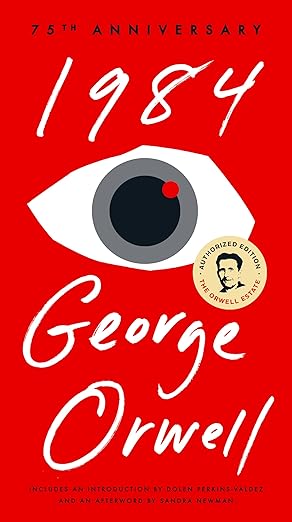
1984 (page 14) | George Orwell
Privacy is a human right. Those without freedom do not have privacy.
If you know you are being watched, which is being judged–love, friendship, and other positive, alpha emotions and spiritual connections become impossible to build, maintain, or grow.
However, not all judgment is damaging to the human Body, Mind, and Spirit(BMS). The judgment Orwell speaks of is constraint judgement that originates from a doctrine that promotes suppression and not growth; freedom is a requirement for growth, and in George Orwell’s 1984, there is no growth, there is adherence to a constrained doctrine that limits actions, thoughts, expressions, and feelings.
There is judgment that pertains to growth, like a Brazilian Jujitsu instructor watching and judging his students. When he watches his students, they have no privacy. However, the instructor observes his students to correct faults and find opportunities to expand the students. They voluntarily submit their right to privacy because they want the watchful eye of the instructor, they want to be watched and seen because the watcher pays attention to grow the students.
This is not what happens in the book 1984. Orwell wrote 1984 around 1949, a few years after the end of World War 2. During this time he was sick with tuberculosis and near death. He wrote the book as a warning, seeing how his government and governments around the world could control populations with propaganda, surveillance, and censorship, all traits of constraint-variant judgment, which is based in fear.
Freedom is confidence.
Control is fear.
During World War 2, the UK used propaganda, surveillance, and censorship, setting up constraints for good, but all constraints against growth, not against the pursuit of pleasure, or other evils, are negative.
Constraint-variant judgement may be established for good, like to support the war efforts. But these constraints can later be used by individuals who are not virtuous and do not seek to do good, but seek to worship and feed their fears or desire for power.
Constraint-variant judgement is a suppression tactic that, even when justified, is dangerous. This is how the road to Hell is paved with good intentions.
Growth-variant judgement is mentorship for good.
Constraint-variant judgement is suppression for bad.
Growth versus decay.
Undignified Modern Emotions
Constraint-variant judgment is decay. It decays positive, alpha emotions that nourish the spirit. Constraint-variant judgement is a strong incentive against expression, which alpha emotions are expressive and outward, coinciding with an expanding ego in a healthy, growing manner.
With constraint-variant judgement, you can only express inward, omega-oriented emotions that shrink the ego in an unhealthy, suppressive manner, promoting emotions Orwell mentions like fear, hatred, and pain.
The shrinking of the collective ego caused by an all-seeing authoritarian causes populations to turn against their neighbors and tear each other apart. The state-sponsored shrinking of the ego shrinks virtue of the state and the individual.
Individuals can forsake virtue and shrink their egos in a state of freedom, but virtue suppression isn’t guaranteed for a free state like with state-sponsored suppression because freedom provides the choice for growth and expansion if one chooses.
The wanderer chooses their pursuits. Their pursuits determine if they find fulfillment or not. Virtue is fulfilling.
An expanded ego, an expanded self, creates depth. A suppressed ego, a suppressed self, creates the shallows.
“Such things, he saw, could not happen today. Today there were fear, hatred, and pain, but no dignity of emotion, no deep or complex sorrows.”
Winston Smith, the protagonist of 1984, could not feel complex or dignified emotions because of the state-sponsored suppression that led to the contraction of the ego, the contraction of the self.
To live is to grow, to feel is to grow and expand into the world.